
How to Use Public Transport in Seoul: Subway, Bus and T-Money Guide
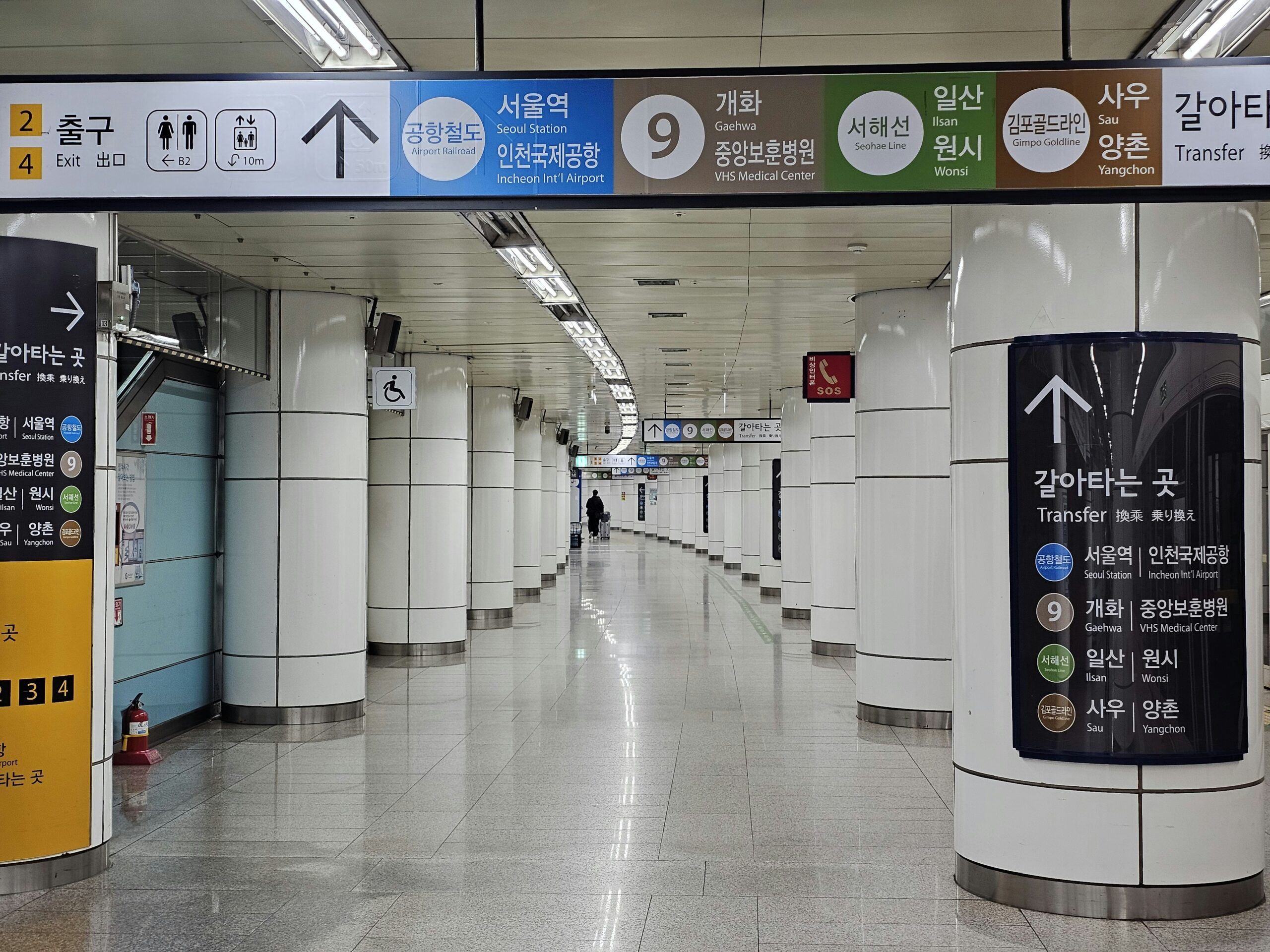
Seoul has one of the best public transport systems in the world, and it’s also one of the easiest to use for first-time visitors. While the network can look complex at first glance, most travellers find that getting around Seoul by public transport is straightforward once they get the hang of it. Even if you don’t speak Korean, signage, announcements and ticket machines are all available in English.
This guide explains how to use public transport in Seoul, including the subway, buses, and taxis, as well as how to use T-Money cards, so you can travel confidently and conveniently without having to purchase physical tickets.
Getting a T-Money Card in Seoul
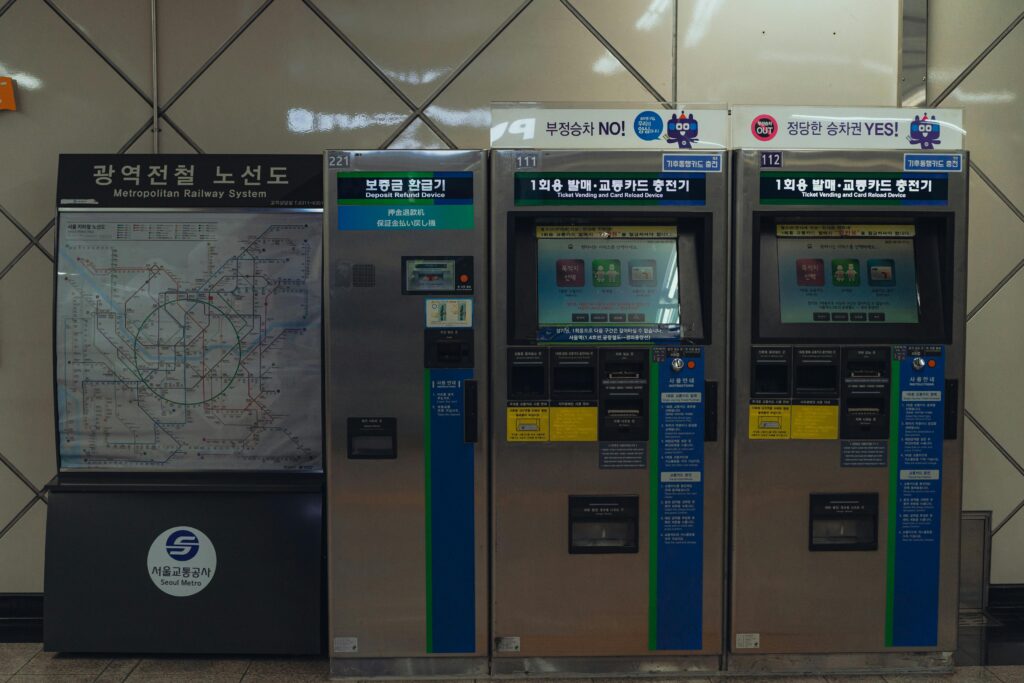
A T-Money card is a rechargeable transport card used across Seoul’s public transport system. It works on subways, buses, and some taxis, and is the easiest way to pay for fares.
You can buy a T-Money card at:
- Convenience stores such as CU, GS25, and 7-Eleven
- Subway station kiosks
- Vending machines in airports and large transport hubs
Using a T-Money card is simple; once purchased, top it up with cash at convenience store counters or machines in the subway. To use it for transport, simply tap in and out at subway gates and in the entrances and exits of buses. You can use your T-Money card in a taxi by tapping it on the reader when you arrive at your destination.
As of 2026, T-Money cards CANNOT be topped up using a credit or debit card. You must carry cash with you in order to top up your T-Money card.
Alternatives to T-Money Cards in Seoul
While T-Money is the most common option, there are a few alternatives that may suit different travel styles. The Climate Card is a prepaid, unlimited public transport pass available for a set number of days, which can be good value if you’re using buses and subways frequently during a short stay, but can’t be used outside of Seoul (including routes to Incheon Airport which can be inconvenient for tourists).
WOWPASS is a prepaid travel card aimed at tourists that also works as a debit card and offers currency exchange, making it convenient if you prefer an all-in-one option. There’s also Cashbee, which functions similarly to T-Money and is accepted on most public transport in Seoul. For most first-time visitors, however, T-Money remains the simplest and most flexible choice.
How to Use Public Transport in Seoul
Using the Seoul Subway
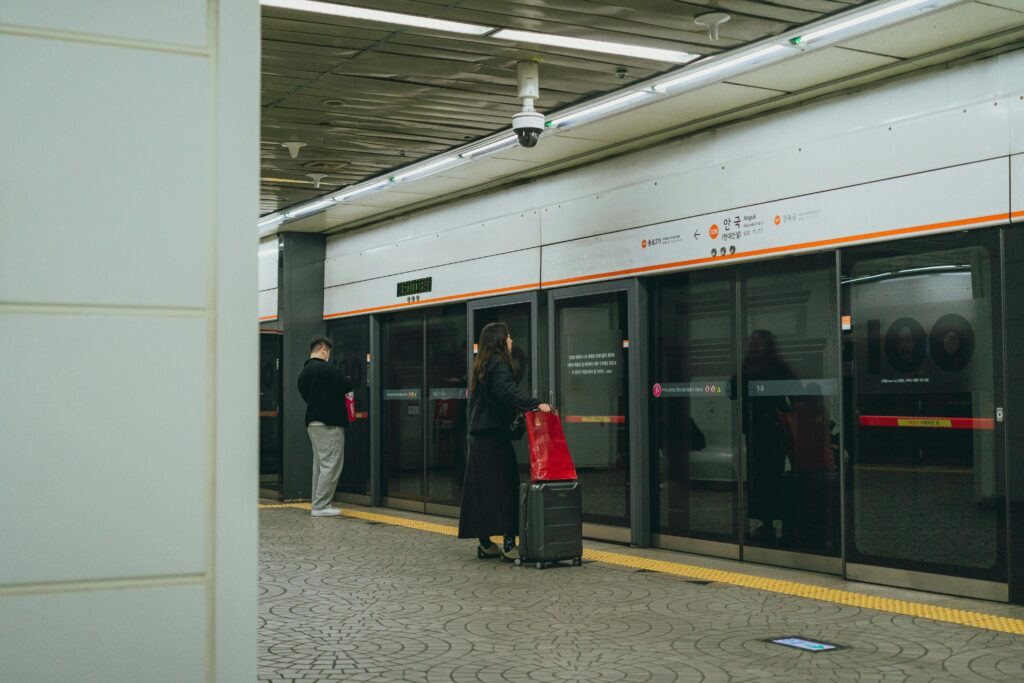
When using public transport in Seoul for the first time, the subway is the best initial option. The Seoul subway system is clean, efficient, and well signposted in English, making it ideal for visitors. Subway trains are frequent and rarely delayed.
What to Expect on the Seoul Subway
- Colour-coded lines with clear station names
- Korean, English, Japanese and Mandarin announcements on trains
- Platform screen doors at most stations
- Jingles and screens indicating Express trains
- Clearly signposted seats for pregnant women, as well as areas for the elderly, disabled and injured. If these seats are full, it’s good etiquette to give up regular seats for those who need it
- Luggage racks on Airport Railroad trains
- Expect heating and/or Air Conditioning depending on the time of year
- Well maintained bathrooms in every subway station
Seoul Subway Safety Tips
- Stand to the side when letting passengers off
- Keep bags close in busy stations, and wear backpacks and oversized bags on your front when carriages are crowded to avoid hitting others
- Follow platform and exit signage carefully
- During rush hour, carriages can be crowded, but the system remains organised and safe.
- If you have any issues, contact a member of staff with the call button at subway gates
- Pay attention to when subway stations open and close if staying out late or leaving early in the morning
- Most subways have escalators and/or elevators so look into this beforehand if travelling with heavy luggage.
- Stand on the right, walk on the left on escalators
Many subway stations are home to underground shopping alleys, restaurants, convenience stores and pharmacies, making them great places to grab convenience items and a snack.
Solo Travel Tip: If you’re nervous about eating alone in restaurants, subways and train stations are a great place to grab a bite to eat – many people in Seoul travel alone so you won’t stand out when eating by yourself.
How to Use Buses in Seoul
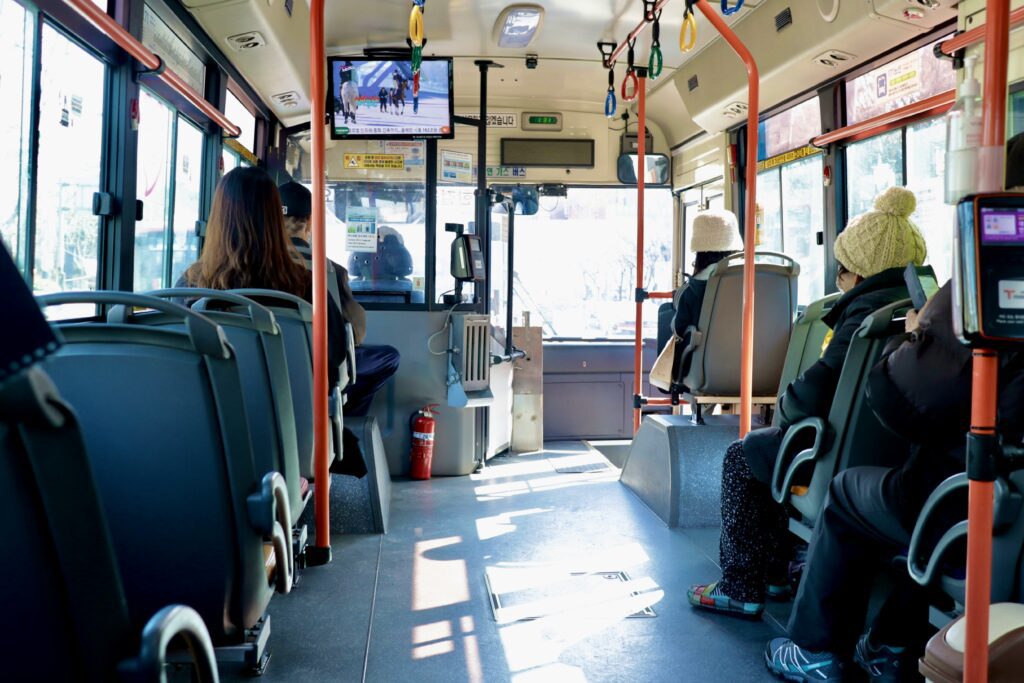
Seoul’s bus network connects areas not directly served by the subway and can be useful for shorter journeys. If a subway journey requires several changes of lines, it may be more convenient to take a bus.
Seoul Bus Basics
- Tap your T-Money card when boarding and exiting
- Route numbers and destinations are displayed on the front of the bus
- Press the stop button before your stop
- Check the bus route beforehand through an online map – sometimes certain routes don’t run on certain days, or there may be a night bus route running instead if late at night
- If you take another bus or subway within 30 minutes, your journey will be combined at a discounted rate to save you from paying two separate fares.
- You can pay more than one fare on one T-Money card if travelling with a group – but you need to ask the bus driver directly.
For first-time visitors, buses can feel less intuitive than the subway. Many travellers prefer to rely on the subway initially and use buses once they’re more familiar with the city.
Taking Taxis in Seoul
Taxis in Seoul are regulated and generally safe, but they are more expensive than public transport.
Using Uber or Kakao T (a local taxi-hailing app) helps reduce language barriers and ensures the journey is tracked. Taxis are a practical option late at night or when travelling with luggage.
The recommended way to pay is through a linked payment card on the app, so your card will automatically be charged. However, through the app you can opt to pay in person – cash or a T-Money card will work in this case.
Best Apps for Navigating Public Transport in Seoul
Using these local navigation apps makes getting around Seoul much easier:
- Naver Map: works well in Seoul and other large cities
- Kakao Map: works well in Seoul but better in more rural areas
- Kakao T: the best app for taxi bookings – Uber has recently been introduced in Korea so there are fewer Uber taxis than Kakao T as of 2026. Kakao T is also useful for booking train and inter-city bus tickets if travelling outside of Seoul.
Google Maps works in Korea, but local apps tend to be much more reliable for transit routes and timings, and will have the most up-to-date information.
Is Public Transport in Seoul Safe for Solo Female Travelers?

Public transport in Seoul is very safe for solo female travelers. Subway stations are well-lit and monitored, and it’s common to see people travelling alone at all hours.
Emergency call buttons, station staff, and CCTV are present throughout the system. As with any city, staying aware of your surroundings is recommended, especially late at night, but serious issues are rare.
Final Thoughts: Getting Around Seoul
Getting around Seoul might seem daunting at first, but once you’ve taken a couple of journeys, it quickly becomes second nature. With a T-Money card, clear signage, and a reliable subway system, public transport in Seoul is one of the easiest ways to explore the city, even if it’s your first visit.
For most travellers, the subway alone will take you to nearly every major attraction safely and affordably, while buses and taxis offer flexibility once you’re more confident navigating the city.
If this is your first time in Seoul, you might also find it helpful to read my guide to 10 Must-Visit Places in Seoul for New Travellers, where I share the best neighbourhoods and attractions that are easy to reach using public transport.
Travelling solo or planning your first trip? Feel free to ask questions or share your itinerary in the comments below, or send me a message anytime.
Happy travels!
Share via:
- Categories:
- Living in Korea
- Travel Guides