First Time in Seoul: 10 Must-Visit Places for New Travellers
If you’re visiting Seoul for the first time, it can feel a little overwhelming, especially when there’s so much to see and do. Where should you actually go, and what’s genuinely worth your time on a first trip?
Worry not, my friend. This guide covers the must-visit places in Seoul for first-time travellers, from famous landmarks to lively neighbourhoods, with a short explanation of what you can do at each stop and why it deserves a place on your itinerary.
I’ve also linked (or I’m in the process of linking, depending on when you read this) more detailed guides for each location if you want to dive deeper. Whether you’re travelling solo, with friends, or just finding your feet in Korea for the first time – happy travels, Korea newbie!
N-Seoul Tower (Namsan Tower)
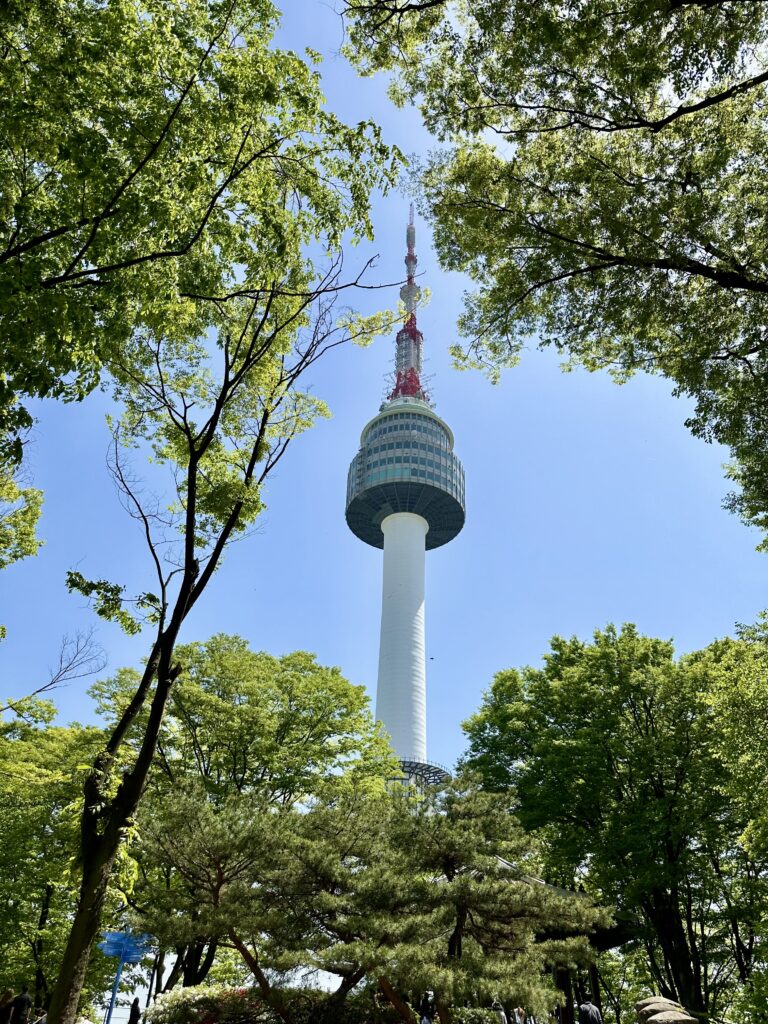
My first recommendation is Seoul’s most famous landmark – N-Seoul Tower (also known as Namsan Tower). Sitting atop Namsan Mountain in the centre of the city, it boasts some of the best panoramic views of Seoul.
Try to go on a clear day with low air pollution to fully enjoy the view. The walk up the mountain is peaceful and scenic, but if you’re not a big walker (or you’re travelling solo and want something easy) there’s also a cable car that takes you straight to the top.
Once there, you can enjoy a meal in the restaurant (it is pricey though) browse for cute souvenirs or simply take in the views. And of course, don’t forget to buy a love lock to attach to the railings – whether you’re visiting with a partner, friends, or even solo, it’s all part of the experience.
How to get there:
Take the subway to Myeongdong Station and use exit 2, 3 or 4. From there, you can walk up the mountain or access the cable car.
Myeongdong
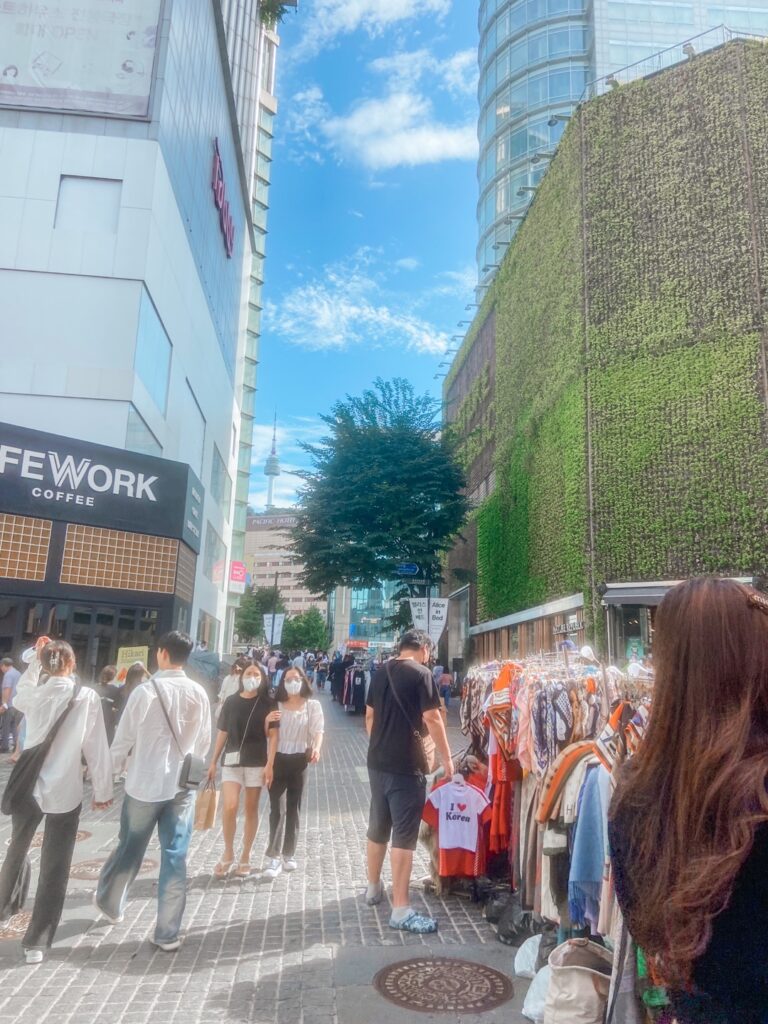
After ticking N-Seoul Tower off your list, it makes sense to head into nearby Myeongdong, one of the most popular areas to visit if it’s your first time in Seoul.
Myeongdong is a hub for shopping, especially if you’re into K-pop and K-beauty. You’ll find endless skincare stores offering deals like 20+20 (buy 20, get 20 free) on sheet masks, discounts for cash payments, and tax refunds – either processed in store with your passport or claimed at the airport later.
Into the evenings, the main street is lined with street vendors selling classic Korean street food that you absolutely have to try. If you’re visiting in December, the area is also beautifully decorated with Christmas lights, which makes it a surprisingly festive place to explore. And if you need a break from the crowds, head up to Myeongdong Cathedral to admire the architecture and enjoy a quieter moment.
How to get there:
Take the subway to Myeongdong Station and use exit 6 to reach the main shopping streets.
Hongdae
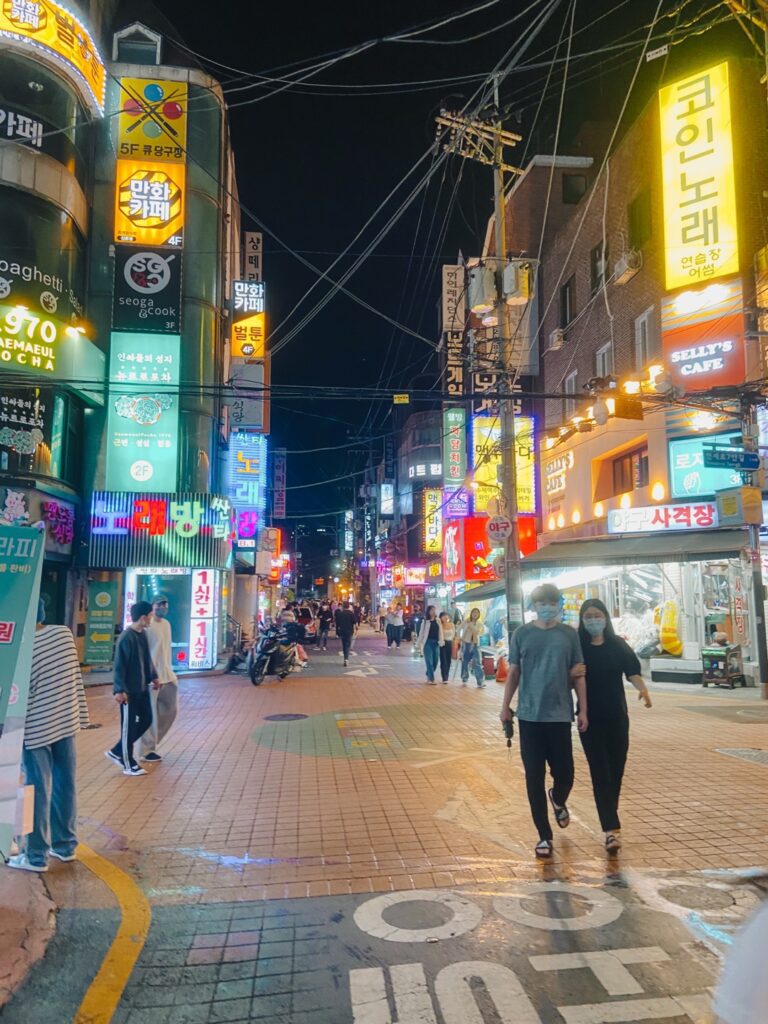
Another area that’s especially popular with first-time visitors to Seoul is Hongdae, a lively neighbourhood known for shopping, nightlife and quirky cafes. The area surrounds Hongik University, one of Seoul’s main arts universities, which gives it a creative, youthful atmosphere. It’s also a busy, well-lit area, making it a comfortable place to explore even if you’re travelling solo.
As you walk along the main streets you’ll often see students or pre-debut idols busking and performing; it’s always worth stopping to watch as the talent level is genuinely impressive. Hongdae is also packed with trendy restaurants, affordable fast-fashion stores, and an array of fun establishments like karaoke rooms and arcades.
This area is great for spending an entire day in Seoul, from morning until late at night. There are plenty of themed cafes to pop into during the day, and in the evening the area comes alive with bars and clubs. AK Plaza is a hotspot for all things anime, while the backstreets of Hongdae are filled with K-pop idol birthday cafes. If you’re after a calmer atmosphere, you can walk into Yeonnam-dong, known for its aesthetic cafes, wine bars and relaxed restaurant scene.
Hongdae also has a reputation for its animal cafes – my personal favourite is the sheep cafe, Thanks Nature Cafe, which is well worth a visit if you’re an animal lover.
How to get there:
Take the subway to Hongik University Station. Exit 9 puts you right at the crossroads of the main Hongdae streets.
Gyeongbokgung Palace
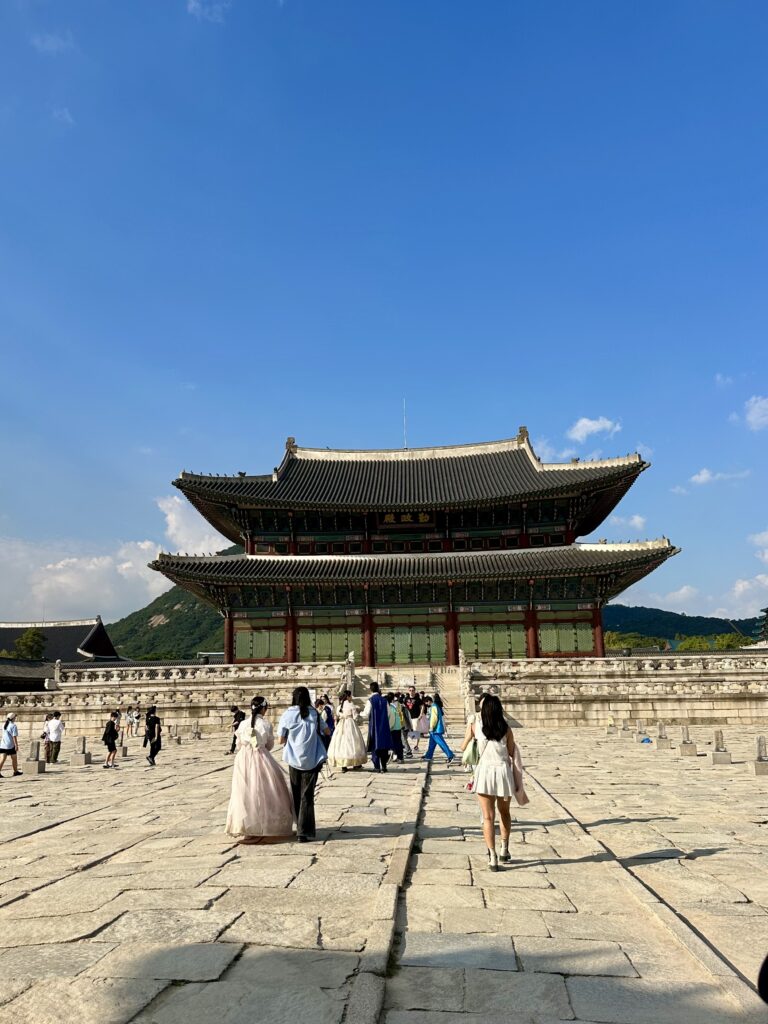
While exploring Seoul for the first time, it would be a shame not to visit at least one of the city’s historic palaces. Gyeongbokgung Palace is the largest and most famous of them all and for many visitors it’s their first introduction to Korea’s royal history.
If you want to try wearing traditional Korean clothing, known as hanbok, this is the perfect place to do it. There are plenty of hanbok rental shops around the palace area, and if you’re wearing hanbok, entry to the palace is completely free. Wandering the grounds in traditional dress, taking photos in front of the ornate buildings and exploring the courtyards is a fun and memorable experience for first time visitors to Seoul.
Inside the palace complex you can also visit the museum to learn more about Korean history and the Joseon Dynasty, as well as a small model folk village. Once you’ve finished exploring, the surrounding area is well worth your time too. You’ll find art galleries, unique cafes and traditional restaurants nearby (although this part of the city does tend to be slightly pricier than other neighbourhoods).
How to get there:
Take the subway to Gyeongbokgung Station and use exit 4 or 5.
Bukcheon Hanok Village
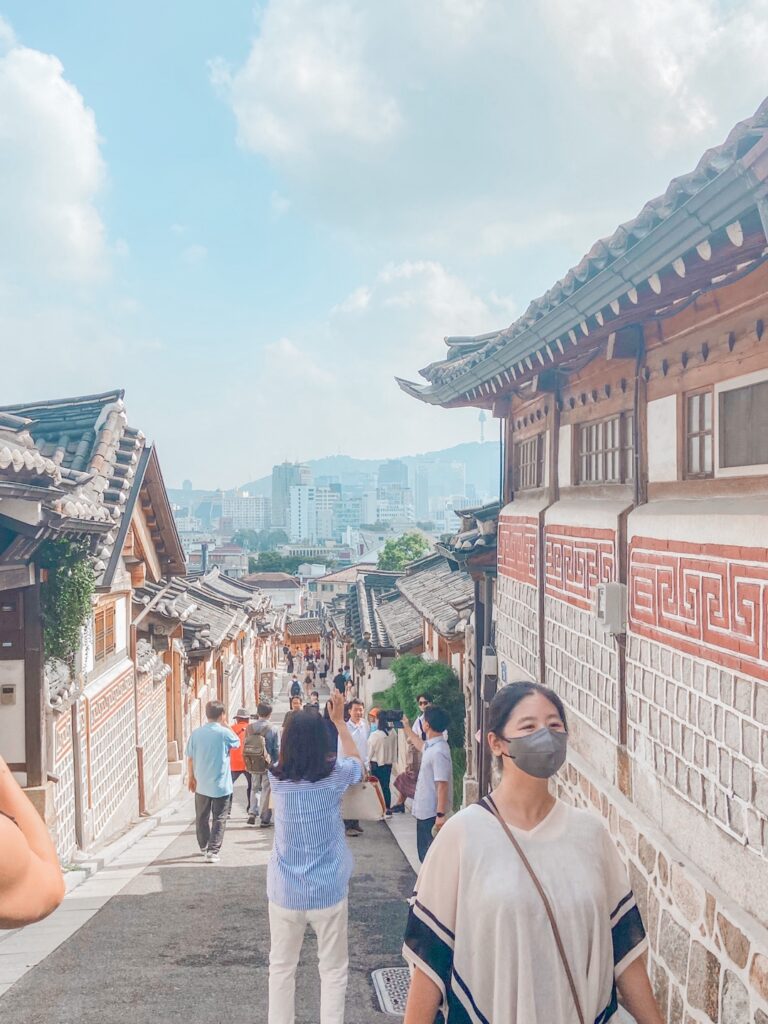
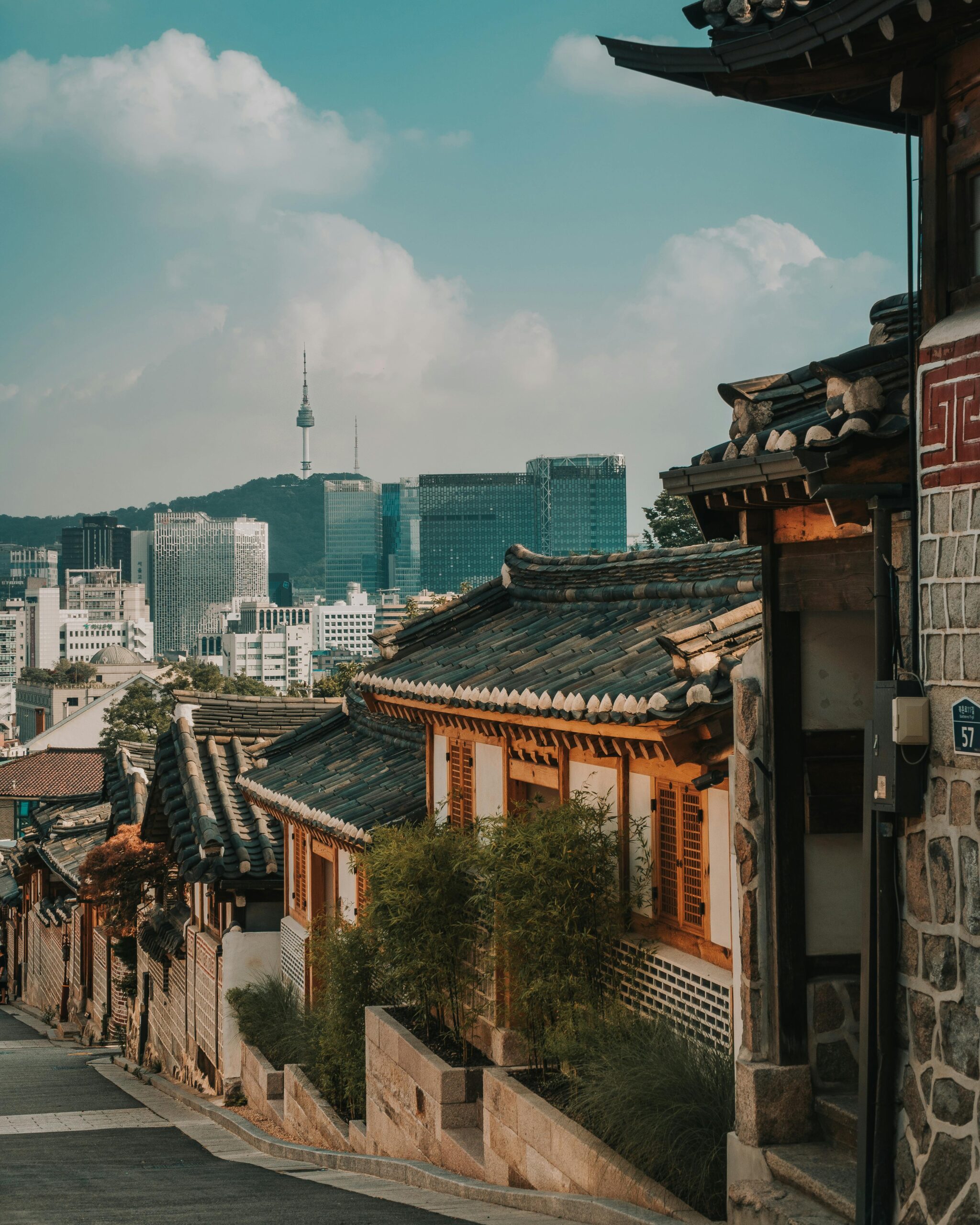
While you’re in the Gyeongbokgung area, it’s well worth walking over to Bukcheon Hanok Village, one of the most scenic and traditional neighbourhoods to visit on a first trip to Seoul. Hanok are traditional Korean houses and Bukchon is home to an entire village of them, tucked between the city’s royal palaces.
Most of the hanok here are privately owned and can’t be entered, but part of the charm is simply wandering the narrow streets and admiring the beautiful architecture. One exception is Baek In Jae House, a hanok once owned by a surgeon in the 1920’s, which has since been turned into a small museum and is open to visitors.
Because Bukchon sits on a hillside, you’ll also be rewarded with fantastic views over the village and across Seoul as you walk higher. I recommend visiting on a weekday if possible to avoid the weekend crowds. Once you’ve finished exploring, stop by one of the traditional tea houses in the area to enjoy tea and desserts in a peaceful setting.
How to get there:
Take the subway to Anguk Station and use exit 2, then walk uphill towards the hanok village and museums.
Dongdaemun Design Plaza (DDP)
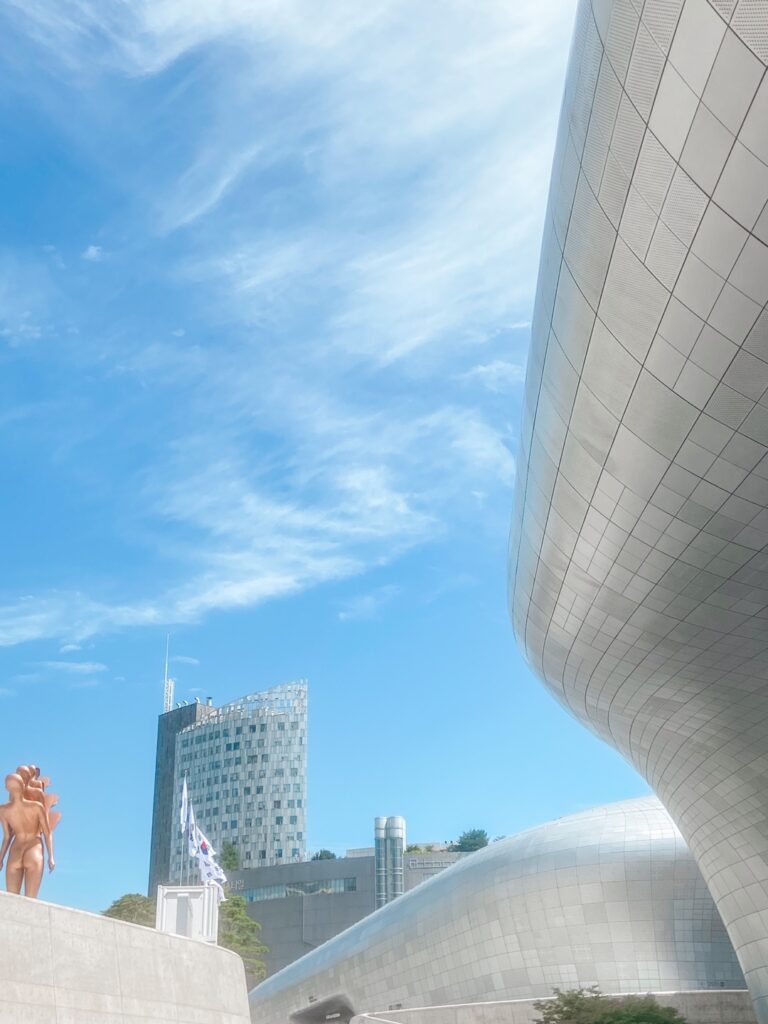
Even if you don’t go inside, Dongdaemun Design Plaza (DDP) is worth a visit during your first time in Seoul. The giant silver building itself is a work of art and one of the city’s most recognisable modern landmarks, designed by world-famous architect Zaha Hadid. The area is busy and extremely well-connected by public transport, making it an easy stop to visit on your own.
DDP hosts a rotating schedule of exhibitions throughout the year, ranging from fashion showcases and design fairs to art exhibitions and immersive digital displays. It’s also home to Seoul Fashion Week, when idols, models, influencers and some of Seoul’s trendiest locals gather in the area.
Once you’ve finished exploring the exhibitions, there’s plenty more to do nearby. The surrounding Dongdaemun area is known for its markets, late-night shopping and a growing number of cute cafes, making it an easy place to continue your day or evening in Seoul. It’s also a great starting point if you’re planning to walk along Naksan Mountain and the Seoul City Wall, a scenic route with incredible views over the city that’s also recently been featured in the hit film K-pop Demon Hunters.
How to get there:
Take the subway to Dongdaemun History and Culture Park Station and use exit 1.
Han River
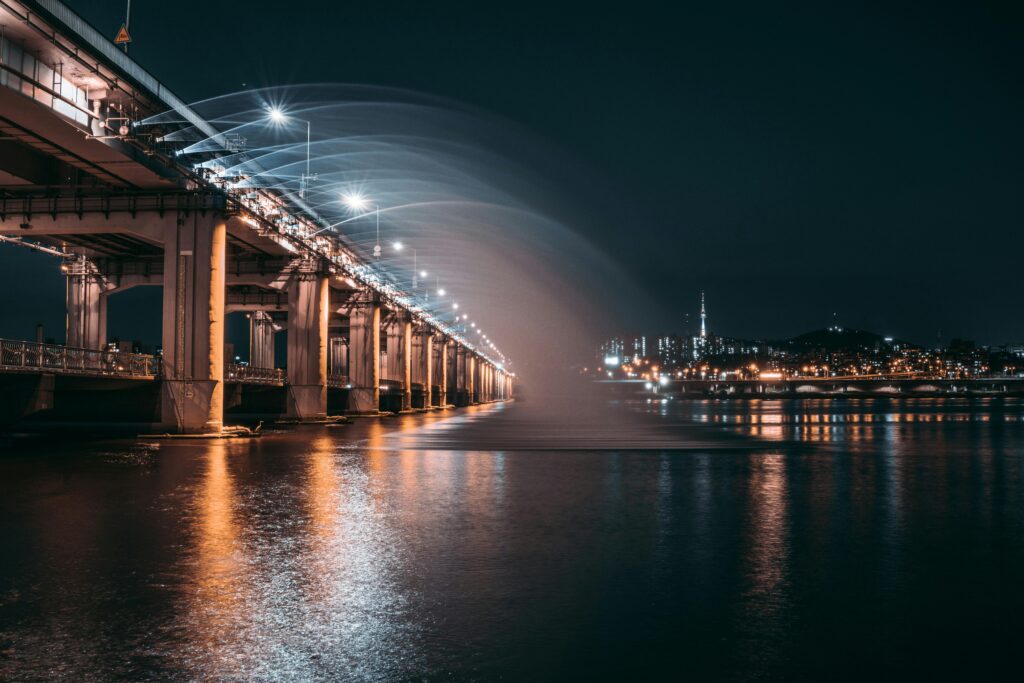
The Han River runs right through the heart of Seoul, splitting the city in two. Even riding the subway across it feels magical, but to really experience it you should take a stroll along the riverbanks. For first-time visitors to Seoul, it’s an iconic spot to enjoy city views, street performances and a relaxed vibe that’s very different from the bustling streets. During the day the river is calm and perfect for leisurely walks, while in the evening it becomes a lively social hub with lights, music and gatherings.
The Yeouinaru area is especially popular; here you’ll find street food stalls, buskers and the famous ‘I SEOUL U’ sign to pose by. The convenience store on a boat docked at the riverside just adds to the area’s charm. On the other side of the river, Banpo Bridge offers a spectacular light show at night, with water fountains illuminated in rainbow colours.
There are plenty of ways to enjoy the Han River depending on your style. You can take a river cruise with a buffet and live entertainment, set up a small picnic (or even a tent for Korean-style ‘camping’), or rent a bike and cycle along the riverside paths. It’s also a safe and well-maintained area, making it ideal for solo female travellers.
How to get there:
The most popular spots are accessible from Yeouinaru Station (exit 2 or 3) or Sinbanpo Station (exit 2).
Jongno and Cheonggyecheon
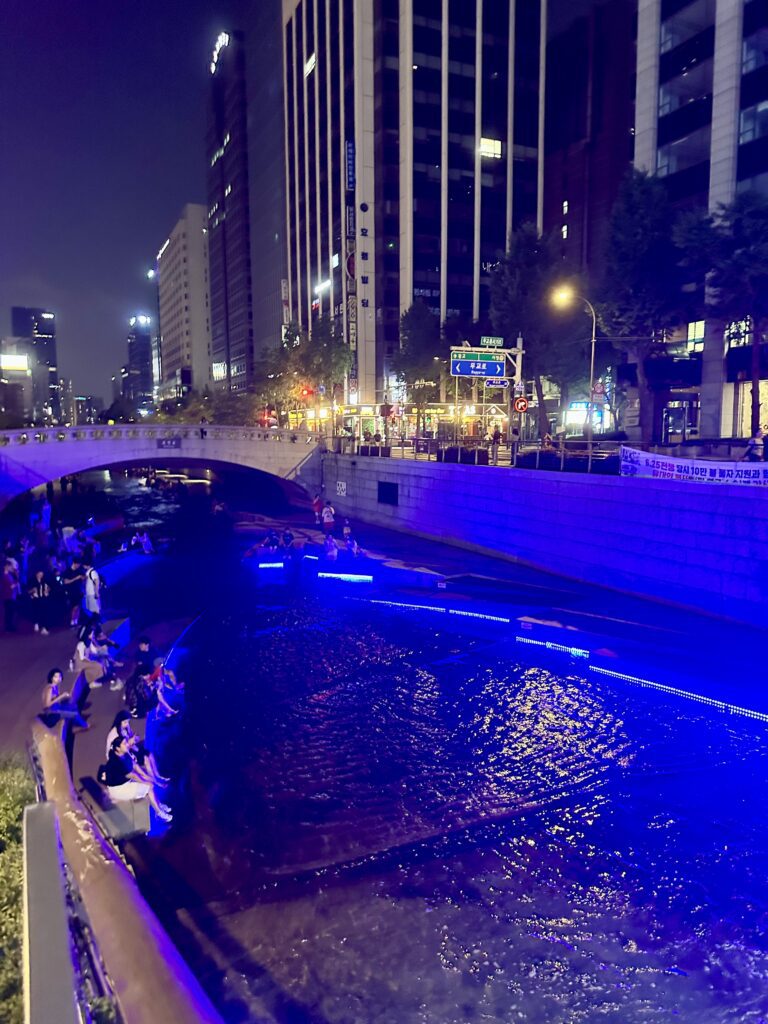
For a more cultural riverside experience, head to Jongno and explore the Cheonggyecheon, a man-made stream running through central Seoul. Originally covered over after the Korean War, the stream was restored as a symbol of Seoul’s urban renewal, making it both a pleasant walk and historically significant. Walking along the Cheonggyecheon gives you a calm, picturesque escape from the busy streets with waterfalls, stepping stones, beautiful bridges and mural artwork along the way. As of 2025 certain stretches also feature digital light displays atop the water.
The stream is especially vibrant in the evenings, when locals gather to enjoy the lights. In winter the National Lantern Festival showcases intricately designed lanterns, adding an extra touch of magic. Cheonggye Plaza, at the start of the stream near Gwanghwamun Square, is the most popular spot to visit and also gives you a chance to see the golden statue of King Sejong – a great combination of history and photo opportunities.
The Jongno area around the stream, with its narrow, traditional streets, is packed with bars and restaurants. Head to Jongno Pocha Street, famous for its outdoor tent bars, where you can enjoy Korean-style drinks and street food; a unique social experience that’s fun and safe for solo female travellers and first time visitors alike.
How to get there:
Take the subway to Gwanghwamun Station (exit 5) for the prettiest stretch of the Cheonggyecheon, or exit 2 if you want to see Gwanghwamun Square first.
Insadong
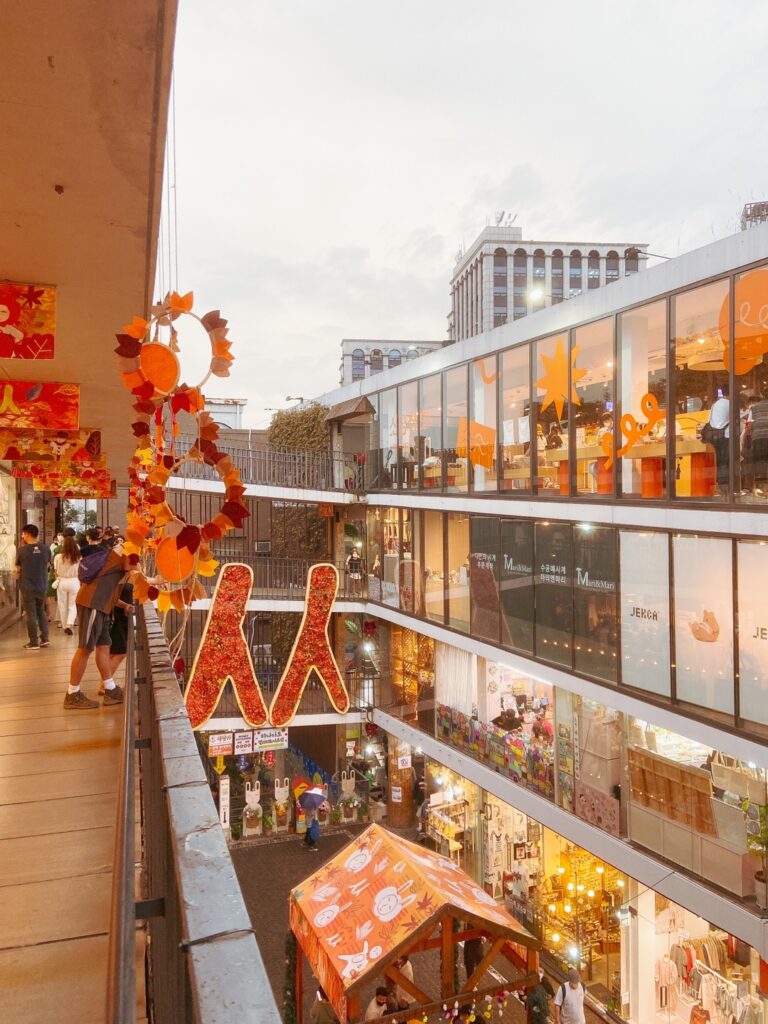
If you’re looking for souvenirs or a taste of traditional Korean culture, Insadong is the perfect neighbourhood to explore. The main street is lined with shops selling everything from postcards and traditional ceramics to fans, stationery and unique trinkets.
For a more modern take, Ssamziegil is a multistorey maze of independent craft shops where you can try your hand at making candles, music boxes, phone cases, jewellery and more. There’s even a machine that gives you a detailed fortune based on your zodiac sign – all you need is a 500W coin, and it’s great fun to hit the ball with the tiny mallet to retrieve your fortune.
Food options in Insadong are plentiful, with traditional tea houses and restaurants offering vegetarian and vegan-friendly dishes. Its proximity to a nearby Buddhist temple also makes this one of the easiest neighbourhoods in Seoul to find vegan Korean food.
How to get there:
Take the subway to Anguk station (exit 6), or Jongno 3-Ga Station (exit 5) for easy access to the main shopping streets.
Gangnam and Jamsil
For a first-time visitor to Seoul, Gangnam and Jamsil offer a glimpse of the city’s modern side, south of the Han River. Unlike central Seoul, attractions here are more spread out, so you’ll need to take the subway between spots, but there’s plenty to keep you busy for a full day or two. These areas are safe, well-lit and easy to navigate alone, making them ideal for solo travellers.
In Gangnam, start with K-Star Road, a street lined with giant bear statues painted with the logos and colours of popular K-pop groups, which is a must-see for fans. You can also visit the Gangnam Style statue, which depicts a giant pair of hands doing the signature dance move, another fun photo opportunity. The main street is packed with popular fashion stores and trendy restaurants, giving it a lively, modern vibe. Daytime is great for shopping and cafe hopping, while evenings bring bustling nightlife with bars and karaoke rooms, all in safe, busy areas.
Jamsil is home to Lotte World, Seoul’s theme park with rides, shows and both indoor and outdoor attractions. Adjacent Seokchon Lake is especially pretty in the spring when cherry blossoms bloom, though visiting on weekdays is best to avoid crowds. Lotte Tower nearby offers one of Seoul’s top viewpoints, rivalling N-Seoul Tower. Sports and concerts are also popular here, with Jamsil Stadium and Olympic Park hosting baseball games, K-pop concerts and events.
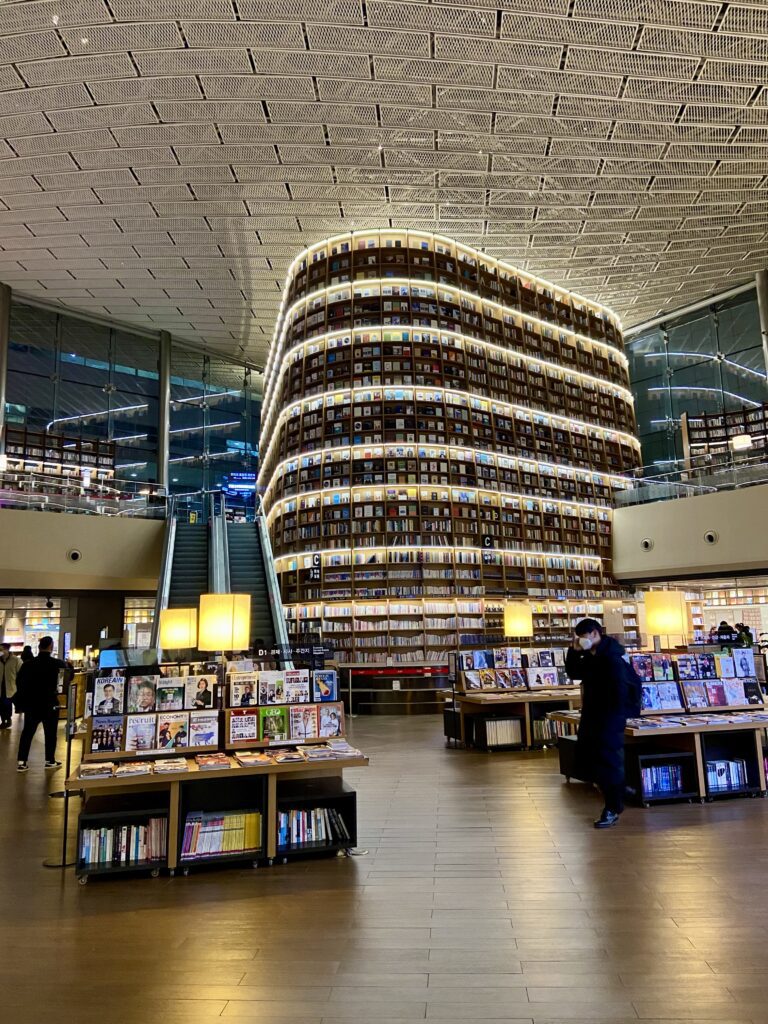
Scattered between Gangnam and Jamsil are cultural highlights like Bongeunsa Temple, a peaceful Buddhist temple, and Starfield COEX Mall, a massive underground shopping complex famous for its stunning library and aquarium.
How to get there:
For Gangnam attractions: Gangnam Station (take any exit)
For Lotte World and Lotte Tower: Jamsil Station
For COEX Mall and Bongeunsa Temple: Samseong Station (exit 6)
Stay tuned for more in-depth guides to the places mentioned here, as well lesser-known areas of Seoul that give first-time visitors a more local experience. I’ll also be covering spots outside of Seoul in future guides.
If you want to start exploring Seoul right away, check out my previous post on Myeongdong: Attractions, Food and Cafes You Can’t Miss – it’s full of tips and must-try spots!
If you have any questions about living, teaching or travelling in Korea, feel free to shoot me a message. I’d also love to hear about your Seoul adventures – which spots are on your must-visit list? Share them in the comments below!
Happy travels!
Share via:
- Categories:
- Travel Guides
- Tags:
- korea
- seoul
- solo travel
- travel
- travel guide